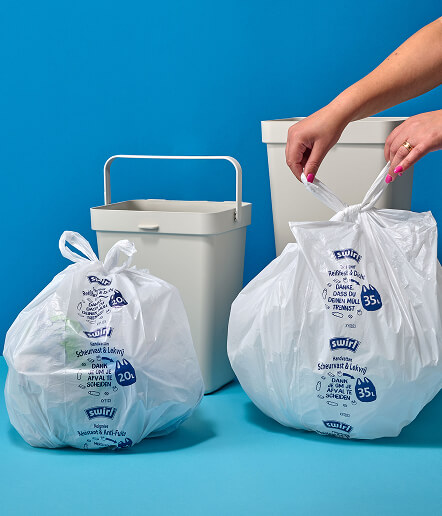
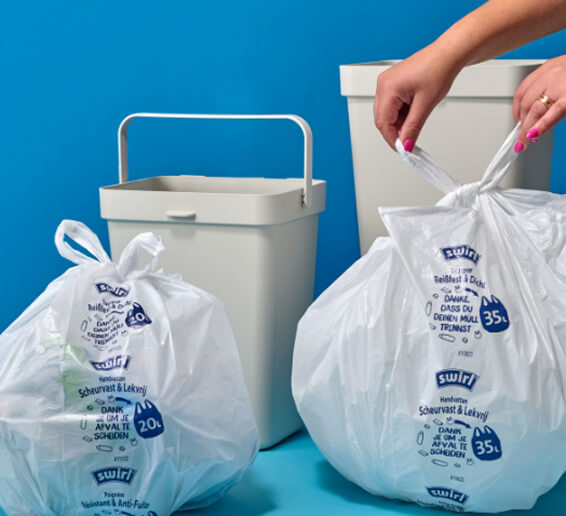
What does a garbage bag in Germany have in common with a milk bag in India? More than it might seem at first glance. After all, both products could be part of the same cycle. To understand this, consider the journey of a piece of plastic – from waste separation through recycling and production to a new life as a garbage bag under the Swirl® and handy bag® brands.
How many of us ever stop to think about where a garbage bag comes from? Most of the time, we simply focus on its function: collecting, transporting, and disposing of trash. However, there is much more to the garbage bags from Swirl® and handy bag® – two brands belonging to the Melitta subsidiary Cofresco – than meets the eye. They are made from 100 percent recycled plastic (excluding the drawstring, colorants, and additives) and demonstrate how waste can be converted into a valuable raw material – and how the circular economy can work in our everyday lives.
Station 1
Waste separation
Plastic products have become an integral part of our daily lives – they are versatile, durable, and hygienic. However, they become a problem if they are not kept in the recycling loop after use.
Packaging that ends up in residual waste is usually incinerated – meaning that only its calorific value is utilized. When collected properly, however, it can be processed and recycled at sorting facilities – including the garbage bag itself. This helps extend the lifespan of the plastic.
Waste separation is the cornerstone of any successful circular economy – even though the myth that everything ends up mixed together anyway is hard to shake. To ensure that plastics can be recycled to a high standard after collection, companies need to design products and packaging from the outset in such a way that they can be efficiently sorted and recovered in different collection and recycling systems. We can only recycle more plastics and keep valuable raw materials in the loop if industry, the waste management sector, and consumers all play their part.
The right way to recycle
Do not put plastic in the residual waste bin – otherwise, valuable raw materials for recycling will be lost
Keep residual waste out of the recycling bin – incorrectly discarded items make it harder to recycle plastics
Follow the local rules – waste disposal systems vary from region to region
Use the right garbage bag – light-colored and transparent bags are generally suitable for packaging waste
Station 2
Recycling in Europe
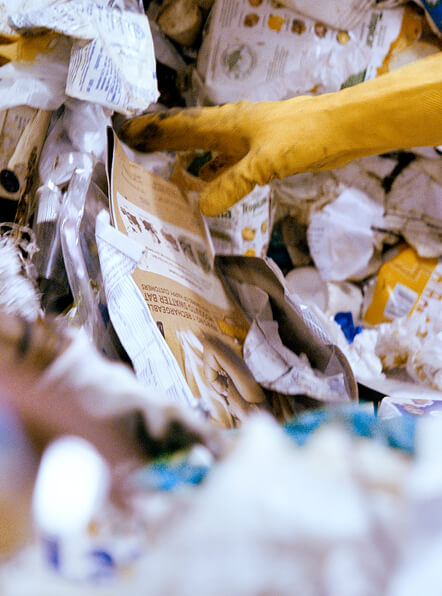
On collection day, trucks pick up the filled garbage bags and take them to the sorting facility. They are first sorted by material type – either by hand or by machine – and cleaned of any large unwanted objects. Modern facilities also use cameras and infrared technology to reliably identify different plastic types. The more carefully the materials are sorted and cleaned, the more consistent and high-quality the resulting material will ultimately be.
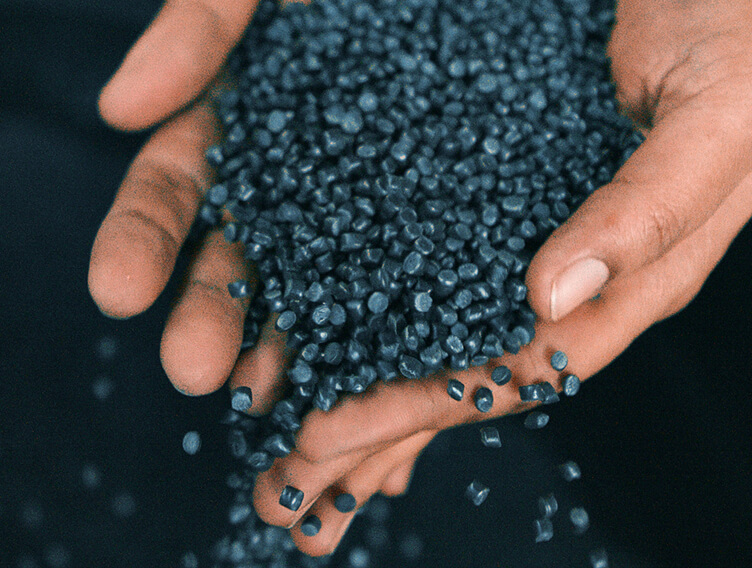
In the next step, the material is shredded, washed, and dried to remove dirt and residues. It is then fed into extruders – machines in which the plastic is heated, melted, and reshaped under pressure. The molten plastic is then pressed through fine openings and formed into granules, which serve as raw material for new products.
Station 3
Fair Recycled Plastic
Recycling is organized differently around the world and depends on the respective infrastructure and social conditions. This is illustrated by the situation in Bangalore, India, for example. In this metropolis with millions of inhabitants, thousands of tons of waste are generated every day. Much of it ends up on the streets, in illegal landfills, or in the natural environment. This is why so-called “waste pickers” play such an important role. They collect recyclable materials and return raw materials to the cycle.
This is where Fair Recycled Plastic comes in – a social business founded by the Melitta Group together with Yunus Social Business Fund GmbH. The goal is to recycle plastic waste, reduce environmental pollution, and at the same time improve the living conditions of approximately 2,000 waste pickers and their families.
The recycling facility in India primarily recycles used milk bags made from LDPE (low-density polyethylene). These are not the beverage cartons commonly used in Germany, but rather plastic bags like those used for milk in many countries outside Europe. The plastic is tear-resistant and flexible – ideal for the production of garbage bags.
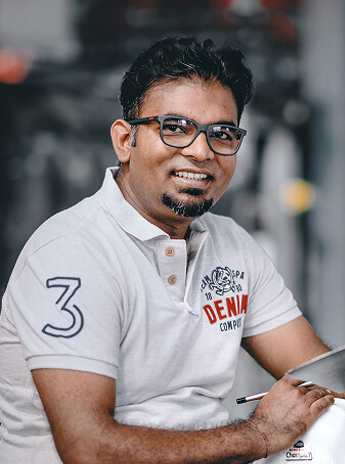
I’m delighted to have the opportunity to contribute to solving a very serious problem: environmental pollution caused by plastic waste. My education gave me an understanding of the versatility of plastics. That’s why I wanted to be part of a fundamental shift in how we view and handle plastic products. I always say: Plastic itself isn’t the problem – it’s how we handle it.
Ashutosh Singh, Country Manager, responsible for Vishuddh and Cofresco’s activities in India
How much LDPE plastic is returned to the material cycle thanks to the recycling facility in India?
Station 4
Production
Eventually, the granules from Europe and India make their way to Cofresco's plant in Poland. Production has been running primarily on green electricity since 2025 (2025: 18 million kWh of green electricity, 4 million kWh of regular electricity). A precisely tailored blend of materials is used for each product line – including the classic Swirl® drawstring garbage bag. This bag is made using a combination of recycled materials sourced from India and Europe, whereby the proportions may vary slightly depending on material availability.
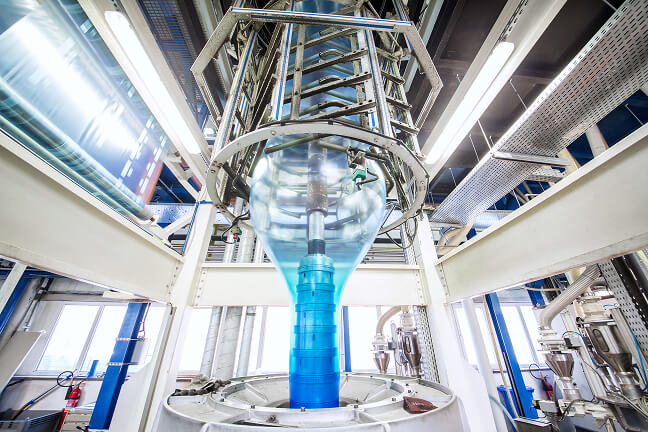
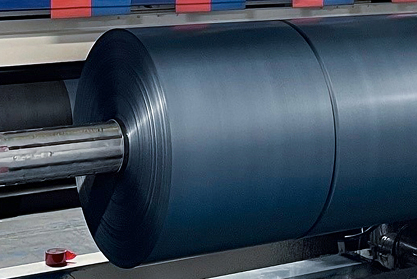
The plastic granules are turned into film, and the film is converted into new garbage bags. This process is based on decades of material expertise: while R&D staff at Melitta Group headquarters in Minden work on new formulations and material efficiency improvements, engineering teams in Poland conduct tests on these formulations directly on the production lines.
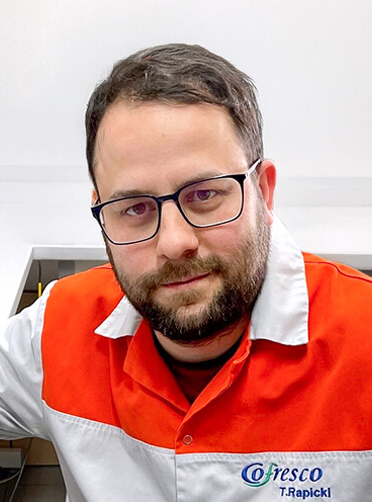
I’m proud to contribute to the success of Fair Recycled Plastic and I’m convinced that Fair Recycled Plastic is our future. With every granule we incorporate into production, we contribute to protecting the environment and improving living conditions for people in India. This reflects Cofresco’s values and my personal conviction.
Tomasz Rapicki, from Quality Management in Poland.
Station 5
Reuse
In the end, the garbage bag ends up back where its story begins for most people: at home or at work. It gets filled with packaging, waste, and other items no longer needed. In doing so, it becomes part of a cycle that starts over and over again.
Every single garbage bag – with the exception of the drawstring, colorants, and additives – is made from 100 percent recycled plastic. This reduces the need for new plastics derived from fossil fuels. At the same time, the garbage bag is tear-resistant, leak-proof, and reliably functional. This demonstrates that sustainable processes and high quality do not have to be mutually exclusive – a philosophy that the Melitta Group embraces in all areas of its operations.
01
Doppio
Two people, two perspectives, one shared ambition: In a joint interview, Katja Möller and Jero Bentz talk about their plans for the Melitta Group.