
Sustainability strategy
Shaping change
Over many decades, the Melitta Group has consistently shaped its markets in the business fields of Coffee, Coffee Preparation, and Household Products, with outstanding innovations, strong brands, and pioneering quality standards. And it sets itself the same high standards when it comes to sustainability: the Group aims to actively drive change and help shape the future in those areas of relevance to its business.
For many years now, sustainability has been firmly anchored as one of the seven core values of the family-owned company. The Melitta Group was therefore an early advocate of international standards and agreements on sustainability and actively promotes their implementation. Sustainability requirements are systematically incorporated into strategies and decisions at both Group level and within the individual operating divisions.
The Melitta Group places great importance on communication and cooperation along the value chain. After all, far-reaching changes can only be achieved when as many stakeholders as possible work hand in hand.
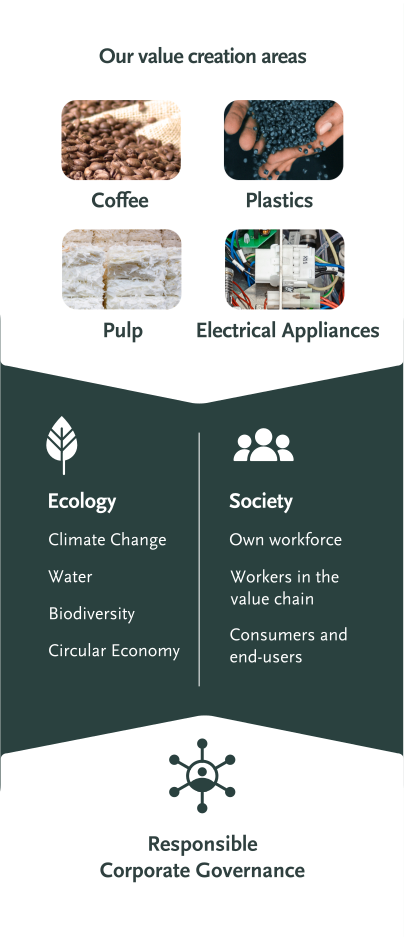
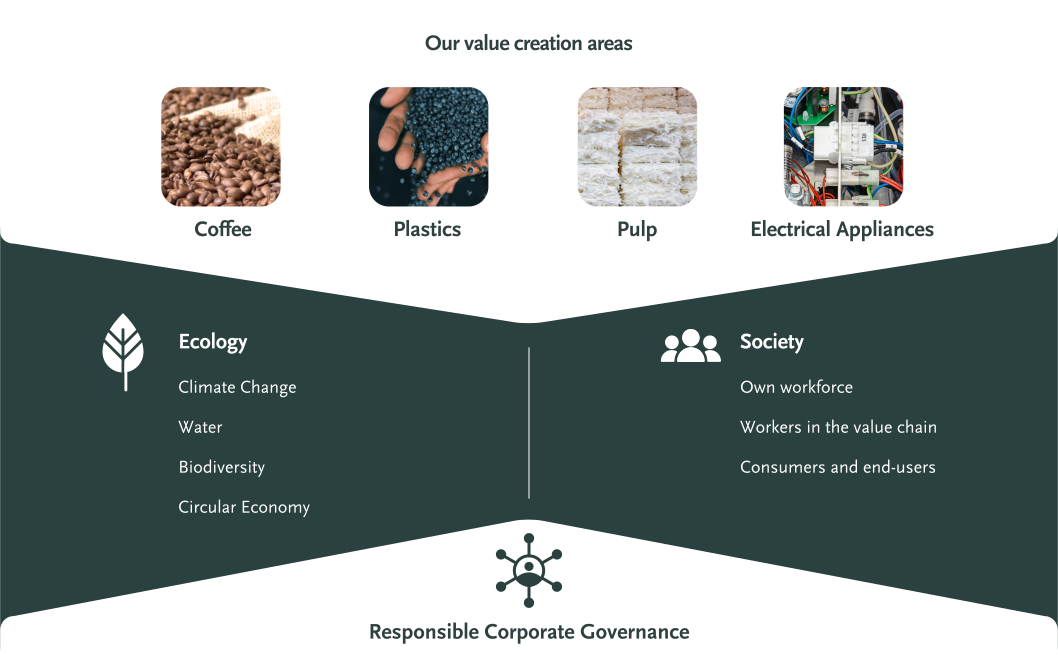
Focus on four areas of value creation
The Melitta Group operates primarily in four areas of value creation. Each of these areas is shaped by its own environmental, social, and economic circumstances.

Coffee
In its coffee business, the Melitta Group sources green beans from virtually every growing region in the world and processes them at its own roasting facilities in Europe, North America, and South America.
Coffee cultivation and harvesting, in particular, present a wide range of sustainability-related challenges:
- Climate change: emissions along the entire value chain; availability of land for coffee growing
- Biodiversity: use of fertilizers, monocultures, deforestation, and the resilience of plants and agricultural systems
- Circular economy: recyclability of packaging
- Social: human rights and working conditions along the supply chain
To effectively address these challenges, the Melitta Group is guided by the following vision for the future and contributes to its implementation with numerous projects and measures: the green beans which the company sources are grown in a way which enables all people involved locally to live comfortably long-term and which preserves or regenerates the ecological systems. The beans are then processed, transported, and roasted in a climate-friendly way which also uses water sparingly. Packaging is recyclable and – whenever possible – reusable or made from recycled materials. The coffee is prepared in an energy-saving fashion and the coffee grounds are put to good use.
The Melitta Group cooperates with other stakeholders to shape industry standards along the entire value chain in order to realize this vision for the future. At the same time, it continues to develop its own targets, structures, and processes to promote and ensure sustainable practices in its coffee business – from sourcing to production, transportation, and packaging, all the way through to marketing and recycling.
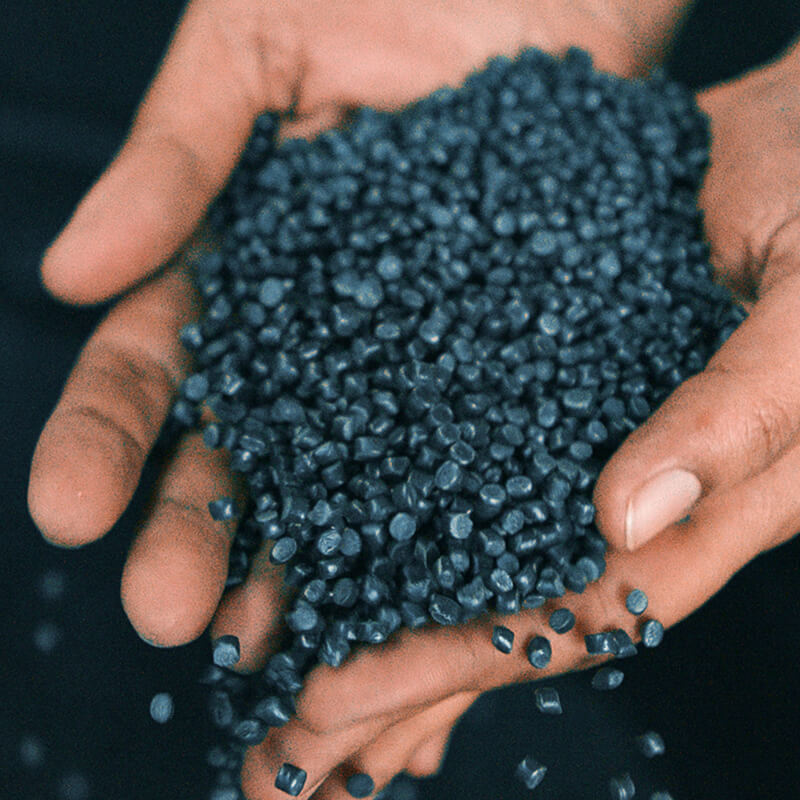
Plastics
The Melitta Group uses plastics primarily to manufacture its household products. These include household and food packaging films, garbage bags, and vacuum cleaner bags, as well as other handy freshkeeping, storage, and waste disposal products for domestic and commercial use.
The greatest sustainability-related challenges in this value creation area are:
- Climate change: emissions along the entire value chain
- Resources and circular economy: use of fossil resources, recyclability of plastics
- Social: human rights and working conditions along the supply chain
The Melitta Group strives to achieve the following vision: in future, it will exclusively use and market plastics made from recycled or renewable raw materials in a climate- and resource-friendly manner, and which can be used multiple times. At the end of their useful life, these plastics will be recycled into new materials or, if no disposal structures are available, will biodegrade fully in the natural world.
To help make this vision a reality, the Melitta Group continuously refines its products and packaging and increasingly focuses on recycled and recyclable materials, as well as on improving circularity. At the same time, the Group is actively engaged along the value chain – from material selection to production and disposal – and cooperates with its partners to develop new, suitable materials and to improve existing recycling structures.

Pulp
The Melitta Group uses pulp for products related to coffee preparation and household use – particularly for coffee filters, household paper, and specialty papers. In addition, much of its packaging is made of paper or cardboard.
The main sustainability-related challenges in this value creation area are:
- Climate change: emissions along the entire value chain
- Biodiversity: deforestation, monocultures, biodiversity, and the resilience of trees and forests
- Water: the water needed for paper production
Vision: the pulp comes from recycled or sustainably managed sources and is processed in a way that protects the climate and conserves water. After use, the paper should preferably be recycled into new products or – where this is not possible – biodegrade fully in the natural world.
To help make this vision a reality, the Melitta Group uses certified raw materials. Moreover, it continuously optimizes its production processes with the aim of reducing the energy and water consumed in the manufacture of filters and paper products. At the same time, it is working to improve its packaging by using new materials, adapting its packaging systems, and eliminating unnecessary outer packaging.
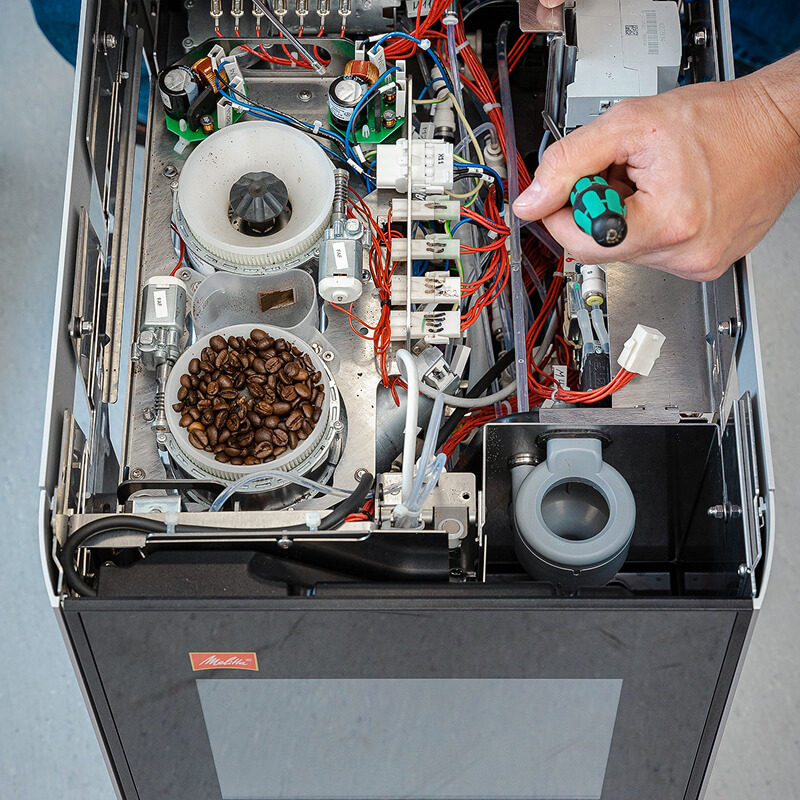
Electrical appliances
The Melitta Group develops and markets electrical appliances, primarily for the preparation of coffee at home or in professional environments. In addition to filter coffeemakers and fully automatic coffee machines, the product portfolio also includes single-serve systems, milk frothers, and electric kettles.
The sustainability-related challenges in this value creation area are:
- Climate change: emissions along the entire value chain and during the use phase
- Resources and circular economy: consumption of fossil resources, reparability, and product durability
- Social: human rights and working conditions along the supply chain
Vision: electrical appliances consist of recovered and/or responsibly sourced materials and are produced in compliance with globally recognized human rights and labor standards. They are durable, energy- and resource-efficient, repairable, and recoverable to the greatest extent possible at the end of their life cycle.
To help shape this future, the Melitta Group continuously improves the energy efficiency, material usage, and durability of its appliances. At the same time, it systematically refines its requirements for suppliers and monitors compliance with the relevant standards. The Group is also working to improve opportunities for repairing and recycling its appliances and to make them more sustainable over their entire life cycle.
CSRD: opportunity rather than obligation
The Melitta Group regards the introduction of the CSRD as an opportunity to align its sustainability strategy in an even more systematic and effective manner. The aim is not only to meet the new reporting requirements but also to embed sustainability aspects even more comprehensively into corporate management. Numerous departments within the Group are therefore involved in the project, which was launched in 2024.
This commitment will also shape the next project steps: once the double materiality analysis is complete, the targets will be revised in the second half of 2026 in accordance with the new CSRD framework. Based on this, action plans will be developed or further refined. At the same time, governance structures and sustainability data management will be continuously optimized. The aim is to establish clear responsibilities, a robust basis for decision-making, and even more effective management of sustainability performance.
Further development of our sustainability strategy
In the fiscal year 2025, the Melitta Group significantly enhanced its sustainability strategy in order to comply more fully with the requirements of the Corporate Sustainability Reporting Directive (CSRD) and the European Sustainability Reporting Standards (ESRS). As a result, the presentation and content of Melitta’s sustainability strategy have changed – in some cases significantly. Moreover, the targets for the topics identified as material are currently being revised.
The materiality analysis based on the principle of double materiality played a central role in this process. To this end, the Melitta Group conducted a two-stage stakeholder survey in 2024 and 2025: a broad-based online survey covering all relevant stakeholders, as well as supplementary in-person interviews with selected stakeholders.
Based on this stakeholder survey, the Group determined which sustainability topics are considered so relevant – from the perspective of both the stakeholders and the company – that they must be managed, reported on, and strategically addressed. The results of this process are presented in the Melitta Sustainability House.
Think long-term.
Act sustainably.
Stakeholder survey: a dialogue on materiality
Which sustainability topics are of particular importance for customers, suppliers, banks, employees, and other stakeholders of the Melitta Group? What expectations do they have of the Group? And what opportunities and risks do these present for the Group’s future development?
In order to answer these questions, the Melitta Group conducted a comprehensive stakeholder survey in 2024 and 2025 in accordance with the requirements of the Corporate Sustainability Reporting Directive (CSRD). The stakeholder survey is a central element of the double materiality analysis. It determines which sustainability topics will be the focus of future sustainability reporting and, at the same time, provides important input for the further development of the sustainability strategy.
The comprehensive project, which involved numerous operating and corporate divisions, followed a six-step process ranging from the identification of relevant stakeholder groups to the validation of the results. A total of 245 representatives from various stakeholder groups were involved, including employees, owners, business clients, suppliers, banks and insurers, as well as representatives from academia, the media, non-governmental and consumer organizations, and trade associations.
The survey was conducted using online questionnaires and in-depth interviews. The content and structure were based on the requirements of the CSRD and the European Sustainability Reporting Standards (ESRS). At the same time, the operating divisions provided a comprehensive status quo assessment – particularly with regard to environmental issues, as responsibility for these matters is largely decentralized. In order to ensure a common understanding, these regulatory requirements, scientific findings, market and competitive analyses, and existing sustainability data were also compiled in reference documents and made available to all stakeholders.
In the next phase of the project, the operating divisions assessed the impacts, risks, and opportunities (IROs) associated with the relevant topics that had been identified. Finally, the results were compiled, consolidated, validated, and approved to form a Group-wide assessment. In total, more than 150 sustainability topics were reviewed as part of the project.
The results of the stakeholder survey were incorporated into the double materiality analysis. This analysis forms the basis for the Melitta Group’s future sustainability reporting in accordance with the ESRS and, at the same time, provides valuable input for the further development of its sustainability management system.
The project clearly demonstrated that the CSRD’s requirements can only be successfully implemented by working closely together across different areas of expertise. At the same time, this cross-functional collaboration provides an opportunity to embed sustainable business practices even more firmly in the value creation processes and to adapt business models to future requirements at an early stage.
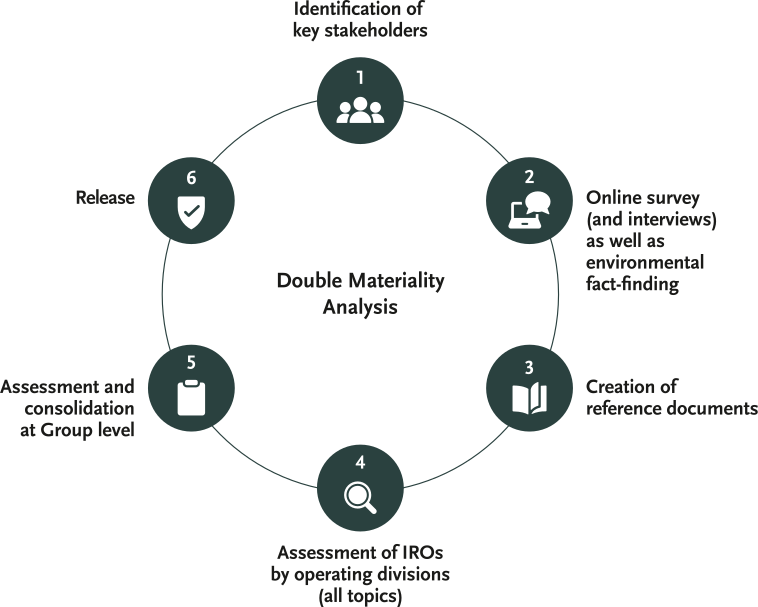
- Identification of key stakeholders
- Online survey (and interviews) as well as environmental fact-finding
- Creation of reference documents
- Assessment of IROs by operating divisions (all topics)
- Assessment and consolidation at Group level
- Relase
-
> 150sustainability topics analyzed
-
245stakeholders surveyed
-
2024/25project duration
Clearly defined responsibilities
The Corporate Communication and Sustainability Division is responsible for managing and coordinating sustainability activities at Group level. In close collaboration with the other corporate divisions and operating divisions, it develops the overarching objectives, strategies, roadmaps, and key performance indicators. It also pools and analyzes Group-wide sustainability data and is responsible for the Melitta Group’s sustainability reporting.
The operating divisions themselves are responsible for implementing the sustainability activities. Each operating division appoints a Sustainability Supervisor with the necessary expertise to address the respective challenges. This person drives, coordinates, and manages the initiatives and ensures the seamless exchange of data and information.
Ongoing dialogue
The Melitta Group engages with a wide range of stakeholders in order to maintain awareness of their expectations and requirements and to inform them about events and developments within the Melitta Group. These include business clients, consumers, employees, suppliers, and capital providers, as well as the media, academia, consumer organizations, labor unions, politicians, non-governmental organizations, and other representatives of civil society.
This dialogue is conducted across a wide range of formats and channels – including in-person meetings, surveys, events, and trade shows, as well as the website, intranet, social media, newsletters, and publications. The Melitta Group also participates in the sustainability committees of various initiatives, cooperations, and associations, such as the Consumer Goods Forum, BAUM e.V., FSC® International, the German Coffee Association, the Central Association of the Electrical Industry, and Markenverband e.V.